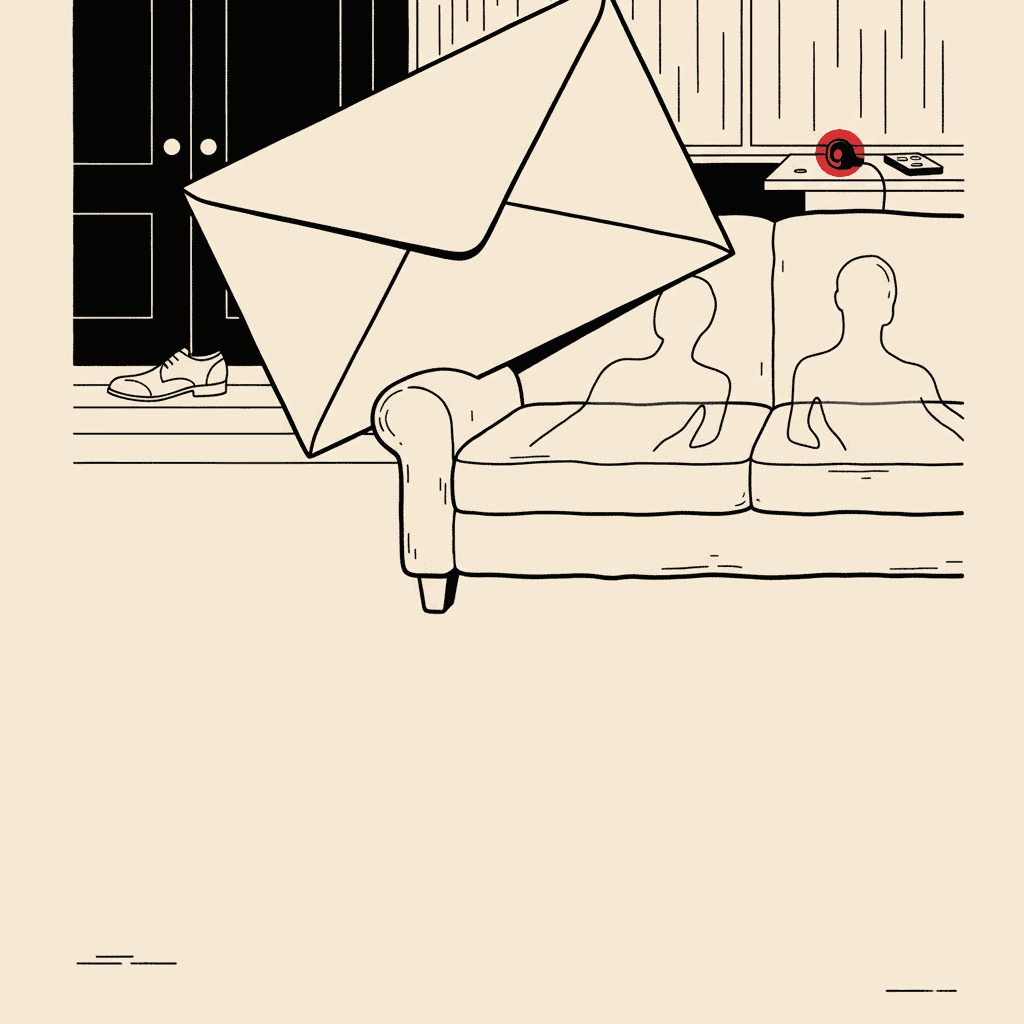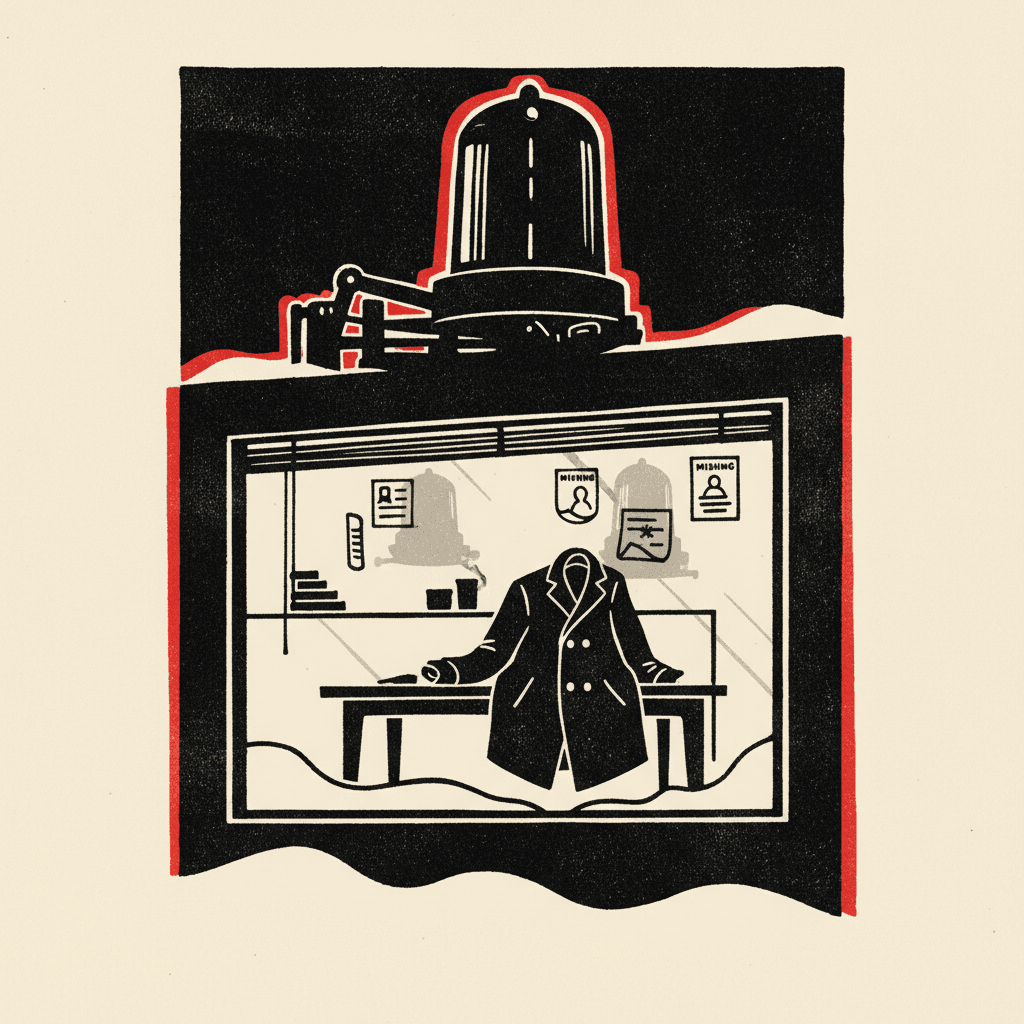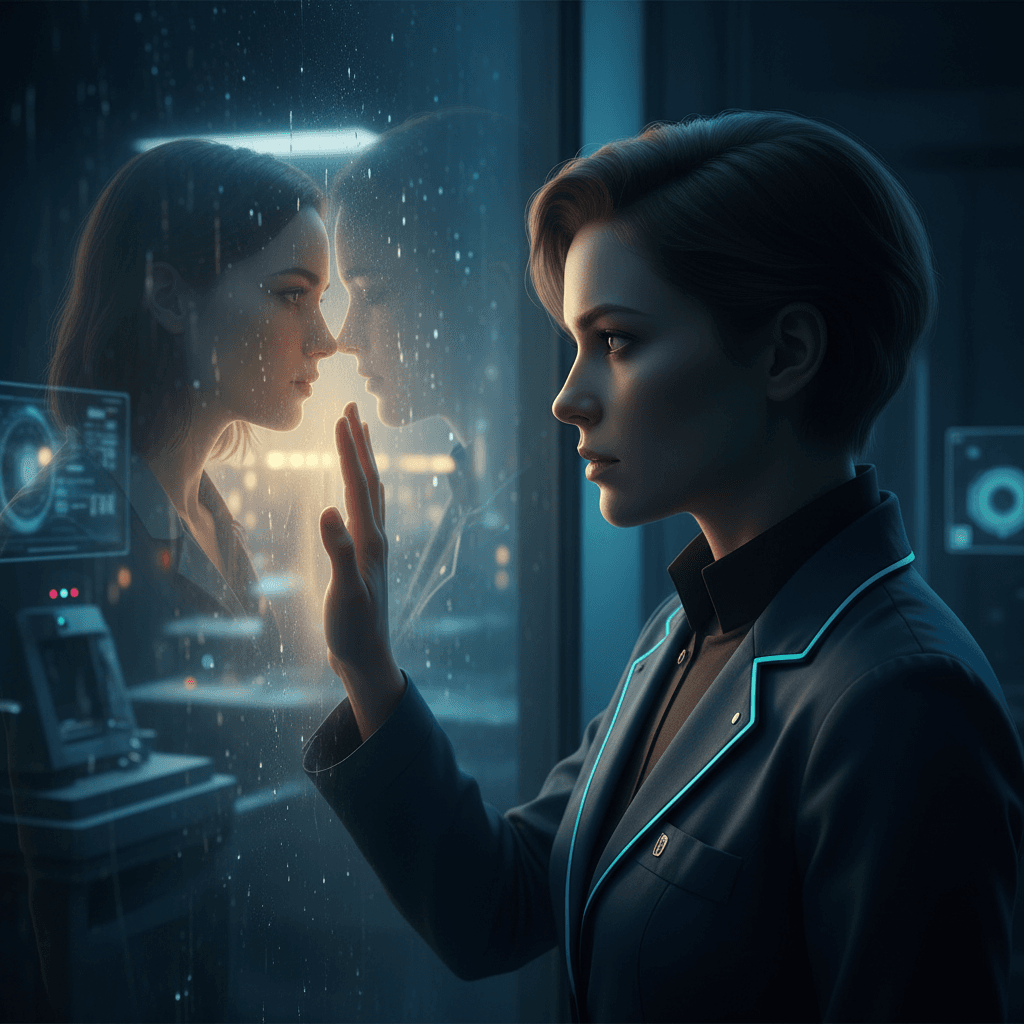

I didn't understand then that the most intimate thing you can do to a person is decide which version of them survives.
The lab had emptied by nine. Just the cooling units ticking, the blue scroll of timecode on dark glass, and Tomás beside me close enough that I could feel the heat coming off his sleeve. We didn't touch. That was the discipline we'd built like a callus over two years. His hands rested on the console. The solvent smell of him hadn't changed.
"Court order's clean," he said. "We confirm match, we sign, it's gone."
His jaw didn't clench. So that part, at least, was true.
I queued the file. The contested memory bloomed on the fogged pane between us, amber against the antiseptic cold, and there we were.
—
*You are on the rooftop. Two years younger. Bass from the club two streets down comes up through the soles of your feet like a second pulse. Chlorine off the pool, cigarette smoke, late-summer heat at your collarbone where the sweat gathers. He stands too close. You let him. The reading glasses he doesn't need catch the string lights.*
*His thumb comes to the edge of your jaw. Not landing. Hovering, the way a held breath hovers. You feel the warmth of his hand before the skin of it, the specific weight of an almost.*
—
In the lab Tomás watched himself watch me. I watched his profile, his throat working.
"You kept the glasses," I said.
"Habit."
The timecode crawled. I tracked it the way I'd tracked ten thousand others, looking for the seam — the microtremor where a splice has been laid in, the place the grain doesn't match. My hands are steady. They've always been steady. It's the one thing the edits never took.
At 00:02:14, the grain shivered.
I felt it before I named it, the way you feel a stair that isn't where your foot expected. Old work. Careful, beautifully done. His signature in it the way some people leave a scent on a coat.
—
*His thumb is at your jaw. And then — the part the glass no longer holds, the part someone cut clean away — you turn your head. You put your palm flat to his chest. You feel his heart going and you say no, quietly, not unkindly, the no of a woman who has done the arithmetic and found the cost too high. You step back into the chlorine air. He lets you. That is the night. That is what happened.*
—
But on the glass between us the warm version played on, seamless, my remembered self leaning into the centimeter and the centimeter closing. I had ached for that closing for two years. I had let it be the thing I touched in the dark.
He had taken my no and folded it into a drawer and given me back a yes I never said.
The cooling units ticked. I sat inside the real cold — the rooftop where I'd walked away and meant it.
"Renata." His voice had gone careful. "We should sign."
He didn't know I'd seen the seam. Or he knew and was praying. Either way his hand had drifted nearer to mine on the console — not touching, never touching, the absence louder than contact — and I understood what he'd wanted all along. Not the night. The forgiveness. A version of me that no longer held the reason to withhold it.
I keyed my credentials. The delete dialog opened, patient, blue.
Then, beneath it, in the audit shell only I could reach, I forked a private copy. Not the warm lie scheduled for deletion. The other one. My palm flat to his chest, my no, my own feet carrying me back from the edge. I saved the version where I was a woman who'd chosen herself, and I let the firm destroy the dream he'd built me.
I pressed sign.
The amber drained from the glass. The rooftop went dark. Beside me Tomás exhaled — two years in that breath — and I heard, very faintly, the sound of him swallowing. It was such a small sound. The sound of a person accepting a verdict they'd written themselves. It made me pity him in a way the anger never had, and I hated the pity, and I kept it anyway, because it was mine and it was true.
On the cold pane I saw only my own reflection, silver threading the black hair I won't edit out.
He got to keep the night that never quite was. I kept the woman who walked away.
I'd spent so long mourning which version of us I'd lost. I never thought to ask which version of me deserved to survive.