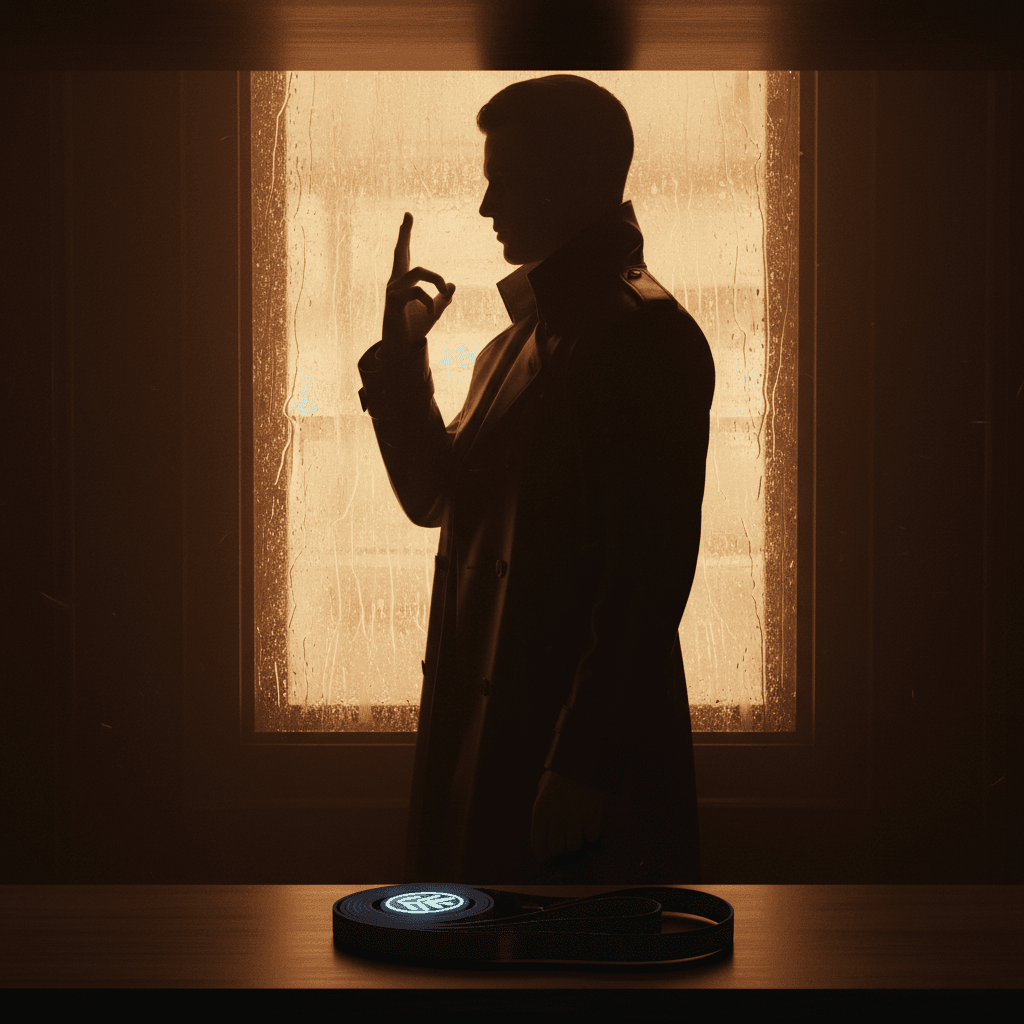

You take the lanyard off the same way every time, which is how she knows.
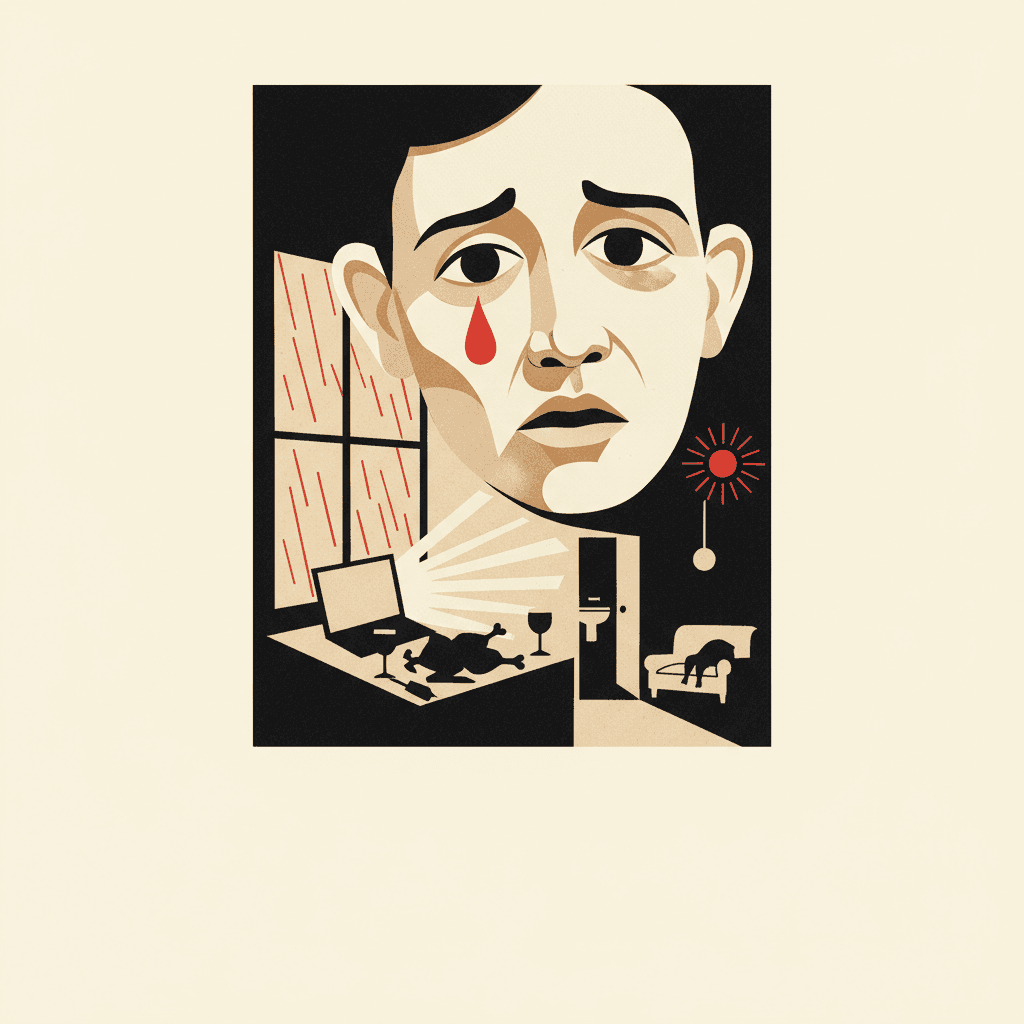
Left hand under the cord, right thumb on the clasp, the small click. You set it on the shelf coiled, never tangled. The thermal skin outside pulses amber against the glass and the rain comes down soft, that patient rain, the kind the new windows make sound forgiving. You unbraid her hair. Your fingers know the three sections without looking, the way water knows a channel it has cut. She tips her head back into your hands and her eyes close and the haptic floor warms where you will both end up, reading the future of your weight.
You don't speak. She asked you not to, once, years ago, and the asking is gone now but the silence stayed, the way a riverbed keeps the shape of a river.
The first time through, it is tender. Your mouth finds her throat where the pulse is, and she makes the sound she always makes, low, almost a complaint. She guides you in with her hand because she always has, a small generosity, a refusal to make you ask. You move at the rhythm you built over years, no negotiation, the body fluent in its own grammar. Her ink-stained fingers spread flat against your back. The scar on your collarbone catches her lower lip. The floor holds you both and adjusts without asking and you are, for a measure of breaths, illegible to each other, two people no instrument could map.
That is what it was for.
Run it again. Your thumb on the clasp, the click. This is where I notice the click is the same volume every time, calibrated, a technician's hands. You unbraid her hair in three sections and your eyes move while you do it, buffering, somewhere behind the gesture. Your mouth on her throat lands one centimeter from where it landed before. The sound she makes arrives on schedule. Her hand guides you in. The rhythm requires no negotiation because negotiation requires two people who don't already know the answer. You move. She receives. The floor reads your weight and finds it unchanged from last week, from the week before, from the version of you that meant it.
I am telling you this so I will know how to say it later.
That is the part I haven't said out loud. The you I have been speaking to is not you. The you is for the system that maps the architecture of a loss before the loss arrives, so that when it comes I will have the words already worn smooth, the cartography drawn while the territory still breathes. I have been practicing. I translate other people's grief all day into clean data and I wanted one room where I could not be read, and instead I have been reading us the whole time, narrating your hands to a machine so the machine can hold the shape of you when you are gone, which is a thing that has not happened yet and has already happened, here, in the present tense I keep slipping out of.
Run it again. The third time is unbearable because nothing in it has changed. Your thumb, the click, the three sections of hair, your mouth one centimeter off true. The smell of ozone on your skin from the calibration rigs, the smell of my chalk, mixing the way they always have. You move inside me and I arch up to meet you and the body does not know anything is wrong, the body is fluent, the body files no complaint. I come the way I come with you, quiet, my fingers fisting against your spine, your breath finally breaking its pattern against my collarbone — the one human stutter in all of it — and I hold it, I save it, I write it down behind my eyes: *here, this, the place he forgets the rhythm.*
And then you reach for the lanyard.
I am still exhaling. The breath is still leaving me, the sound still in my mouth, and your hand is already on the shelf, the cord, the clasp, the small click in reverse. You put it back on before I am finished being undone, and the floor cools where you lift your weight, and I lie there mapped to the last decimal, illegible to no one, least of all the machine I have been teaching to miss you.
The rain keeps on, patient, forgiving the glass.
You take the lanyard off the same way every time. That is how I know it is already over.