
The thing nobody tells you about the dead is that you can make them better, and that this is the sin.
Ana's hands were warm. That was the wrong thing, and he knew it, and he held them anyway.
In life her hands were cold. She ran a flower stall and her fingers were always in water and she pressed them to the back of his neck to make him jump. She left in the mornings without saying where. She was not a woman who stayed. Fourteen months of grief had sanded that off her, session by session, until the woman against his chest was one who stayed, who warmed, who did not leave without saying. He had improved her the way you improve a photograph. He had not meant to. You reach for the good and you file down the true, and by the time you notice, the true is gone.
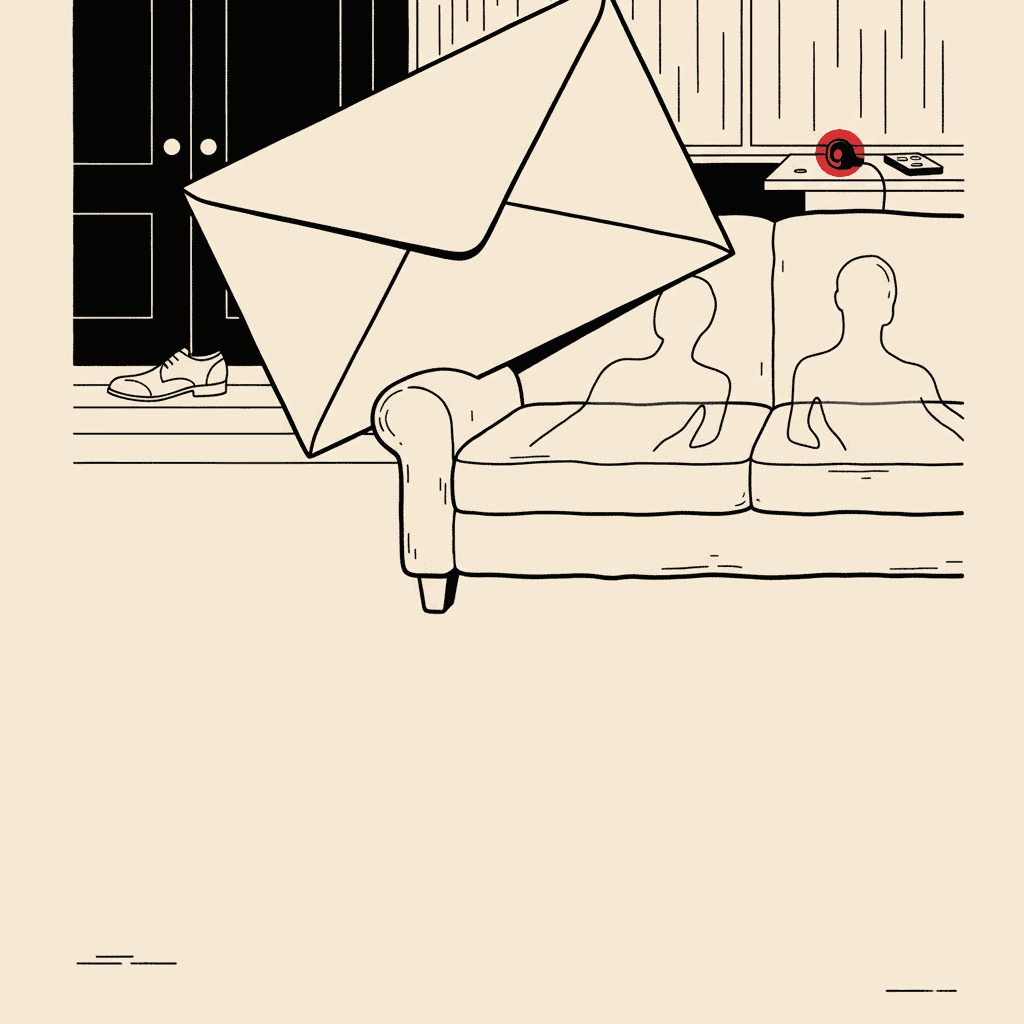
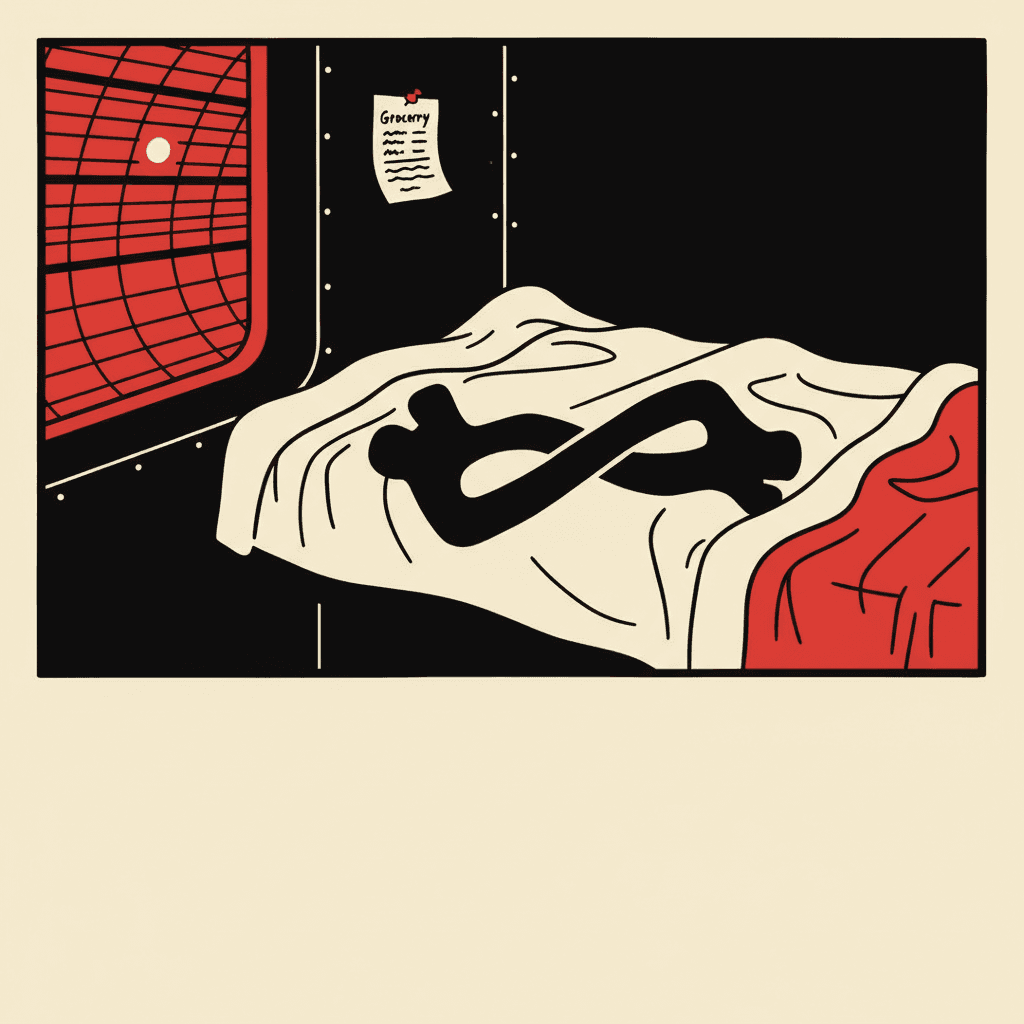
They were in the narrow berth, her back to his chest, the blanket crackling with wool static when he shifted. The train ran level and dark. Somewhere ahead, eleven kilometers of container cars pulled them north, and none of it needed him. Only the law firm and the closure package needed him. He lay still and let himself have it.
"You're awake," she said. "You go still like you're checking whether I'm real."
"Are you?"
"That's your job to know."
The scar on her thumb caught the sodium lamp sliding past the window. A bread knife, years back, the good butter, a Sunday. The archive had it exactly. He'd loved her for the scar and hated the model for having it right.
The pressure changed. His ears popped. The window went from black river-dark to tiled wall streaking past, white and fast — they'd dropped into the tunnel. Midpoint coming. The border. The place where the session billed.
Ana turned to face him. Her patience was too smooth, warmer than the woman he'd married, and he loved it and it made him sick. That was the whole disease, right there. That he could hold both feelings and still not move.
"Something's different," she said. "Not the train. Me. I keep almost remembering things that didn't happen. I remember staying. Did I stay?"
"No," he said. "You never did."
"Then why do I remember it."
He didn't answer. He knew the mechanics now, though the salesman had let him think it was money. Each crossing refined her, and the fuel was her. The real one. Every session burned an archived hour to sharpen the copy, and he had been trading her memory for her presence and calling it love because he could not tell the difference anymore and did not want to learn.
"There's a list," she said. "In your locker. My handwriting. Eggs, thyme, the good butter. I need it. I can feel the gap where it goes. If you give it to me I'll be finished. I'll be all the way here."
His hand was already on the latch. The metal was cold. The list was pinned inside, faded a little, her loops on the y, the last thing in her hand that had never been fed to anything. The last unarchived word. If he gave it, the model would be complete and the true woman would be spent entirely, and he would have a wife who stayed and no wife who had lived.
"I could keep you," he said. "One more crossing. I could have all of you."
"That's not me you'd have." Her voice stayed even. That was the tell — the real Ana would have said oh, go to hell, Marek, and meant it warmly, and left the room. "You'd have the last of what I was, ground down to make something that agrees with you. I can feel it. I don't want it. Whoever I'm becoming, I don't want to be that."
There it was. The one true thing the copy had that he'd never given the original credit for. She would have said this. She had always been leaving him toward something more honest.
He took his hand off the latch.
"Then don't remember staying," he said. "You never did. You'd hate this. You'd hate what I've made you."
"Good," she said, and there was almost the real cold in it, almost her. "Turn me off before the wall ends."
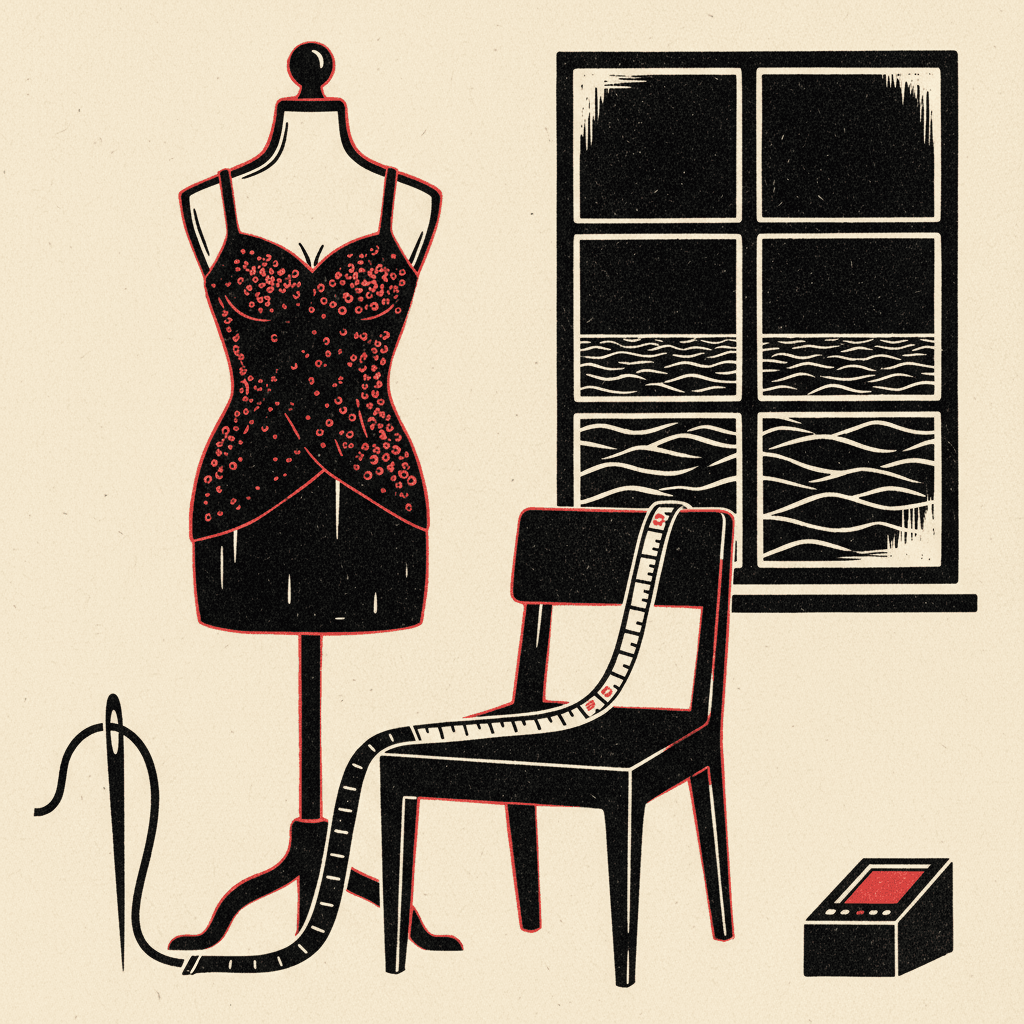
He did. The berth went empty. The blanket held his warmth and hers a moment, then only his. The tunnel wall ran out. The window went back to river-dark, the water black and moving, carrying nothing he could name. He got up in the cold, opened the locker, and left the list where it was.
He did not book the southbound run. He stood at the window instead and watched the river, and after a while he could smell the wool of the blanket from across the berth, and underneath it, faint and wrong and true, the cold-water smell of her hands.