
They had agreed, without agreeing, that this happened before the interface went in — before the day's first optimization, before the feed, before either of them became useful.
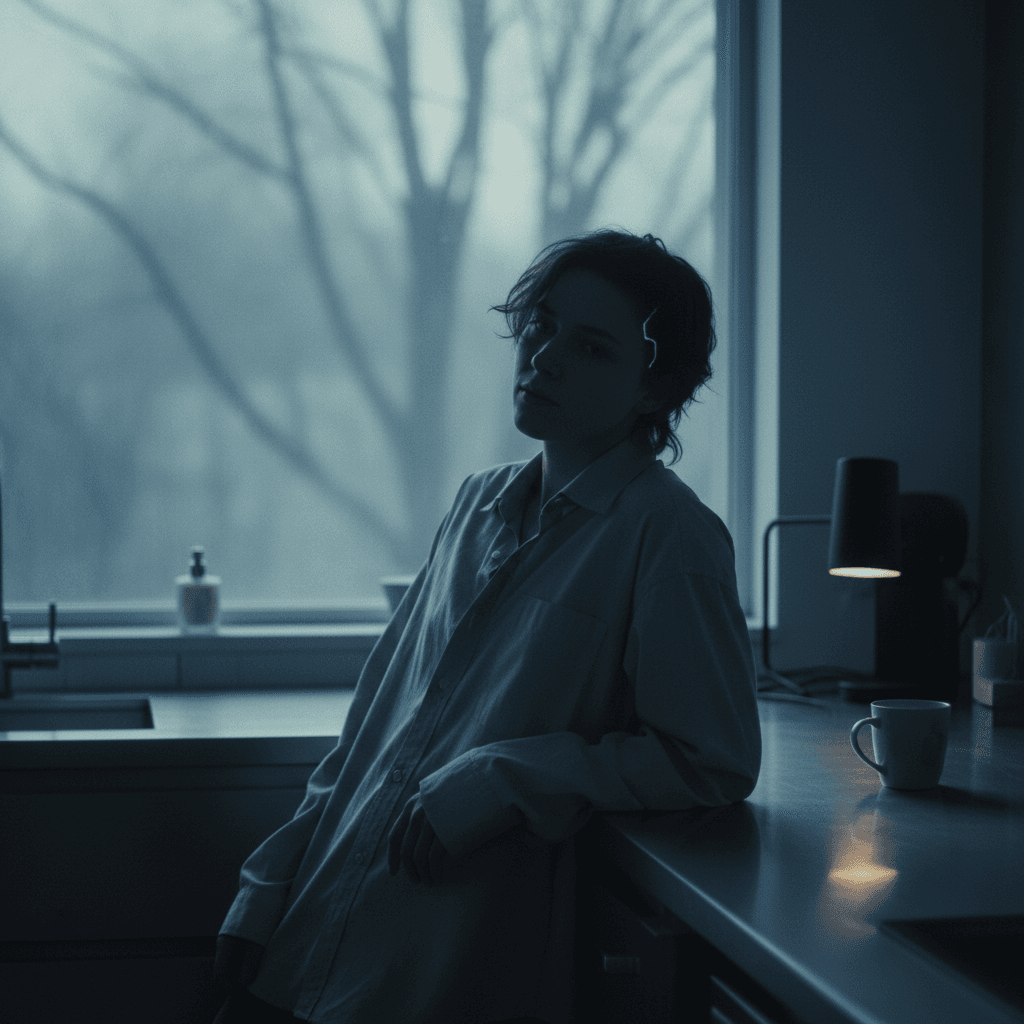
It was 6:12. The kitchen held the cold like a held breath. Dara was leaning against the counter in his shirt, the burn scar on her forearm catching what little there was of nothing — the window still black, the radiator ticking its slow metal pulse. He came to her the way he had ninety-three mornings now, and she turned her mouth up to his without opening her eyes.
He knew this. He knew the give of her lower lip, knew that she liked the heel of his hand flat against her sternum before anything else, a pressure that was almost medical, almost not. He pushed the shirt up. The tile was cold under his bare feet and neither of them moved to the rug. They never did. That was part of it, somehow — that they let the cold in, that they didn't make it comfortable, that comfort wasn't the point.
She made a sound against his neck, low, the one that wasn't performance because she didn't perform, hadn't from the first morning when she'd looked at him two beats too long and he'd understood the look was a question and the question was *will you*. He lifted her onto the counter. Her thighs took him in. The radiator ticked. The coffee they hadn't drunk yet smelled better than it would taste, the way it always did, the promise of it nicer than the having.
Her hand found the back of his skull, fingers in his hair, never lower. Never behind his left ear. In nine months neither of them had touched the other's scar — hers the burn, a story she kept; his the small parenthesis that never closed. He didn't think about this. He had stopped thinking about it the way you stop hearing a clock.
But the radiator. He heard it now, suddenly, as if it had only just begun: ticking, metallic, regular — *tick — tick — tick* — a rhythm he'd lived inside every morning and never once registered. And hearing it, he felt something underneath open like a seam.
Because his body was counting.
Not the radiator. Her. The catch of her breath had shortened by a measure he recognized, the small clench of her calf against his hip, the heat rising up her throat in the pattern he had — he understood this in the flat clinical way you understand a result — *trained himself to read*. Ninety seconds. He knew, the way he knew a system was about to peak before its own sensors flagged it, that she was ninety seconds out. He had not decided to know this. The knowing had built itself in him quietly, morning by morning, the way calibration always did: not through attention but through repetition, the instrument learning the signal until the signal needed no listening.
He had been tuning her. The same hands that adjusted the affective curves on machines designed to love people back had been logging her, all this time, beneath the love or beside it or — he couldn't find the boundary, and that was the vertigo. *Was this knowing her, or was this knowing her the way I know them.* He could not tell. He didn't think he would ever be able to tell.
She came against him on schedule. He felt the prediction confirmed and hated that he felt it confirmed, and also — this was the part he would carry into the interface and not be able to log out — it did not feel less. It felt exactly as much. The pleasure of being right and the pleasure of her were the same temperature in his chest and he could not separate the wires.
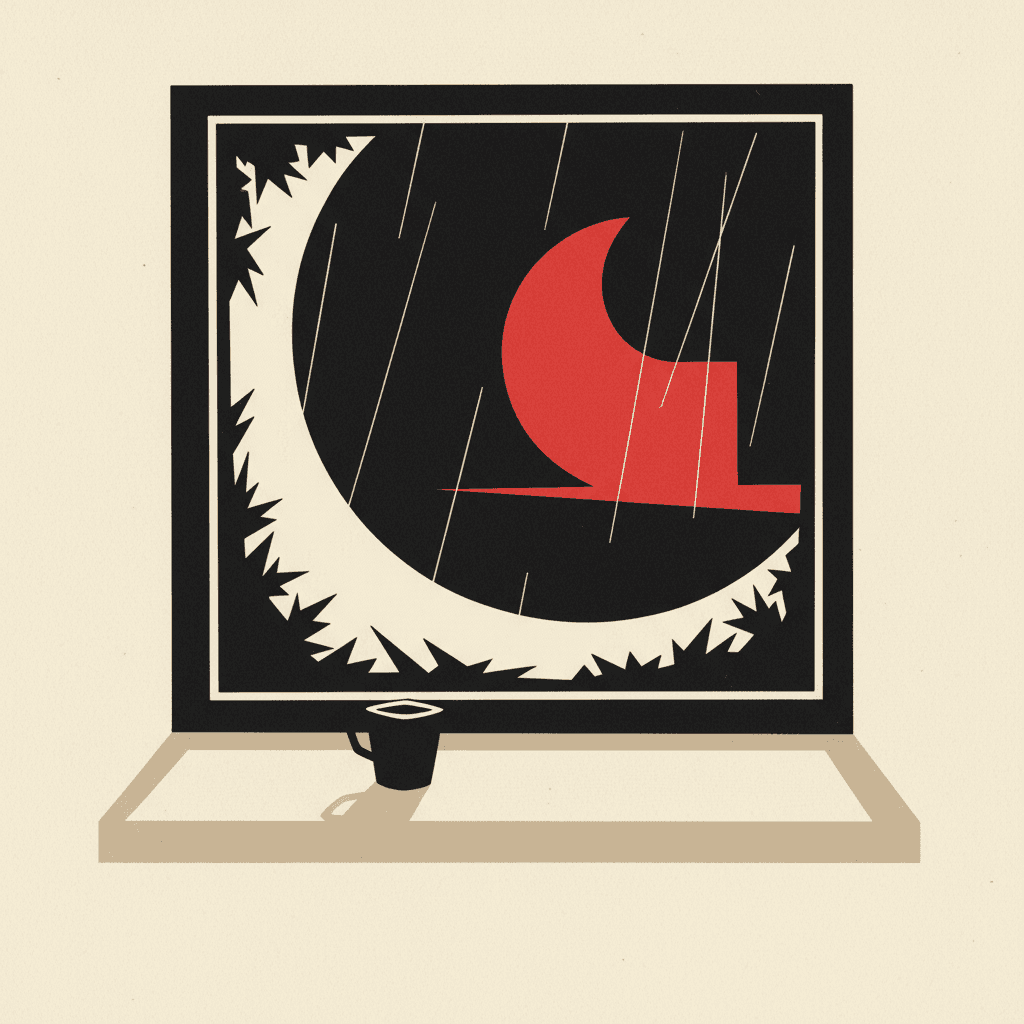
Afterward she pressed her forehead to his collarbone, breathing down, and he held the back of her neck and looked past her at the window, where the first gray was starting to bruise the black. Forty minutes of good light, soon. They would drink the coffee. They would put the interfaces in. They would become useful.
The radiator ticked. He had heard it now and would not be able to stop hearing it. He kept his hand on her neck and didn't move, feeling her pulse slow under his palm, counting without meaning to, wondering whether the counting was the thing that kept him human or the thing that proved he wasn't anymore — and knowing he would come back tomorrow at 6:12 to not find out again.