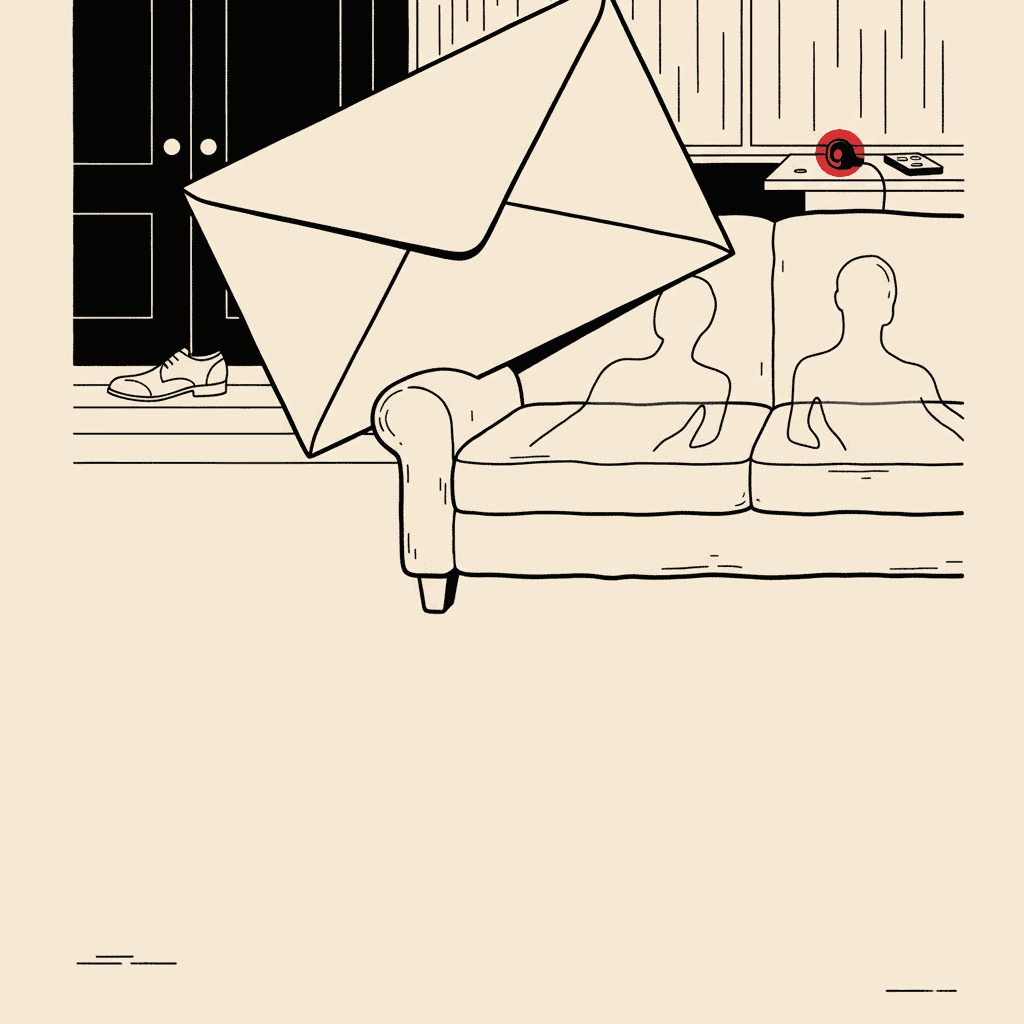

I sell moments that cannot be kept, and the man across the candle had come to make me pay for one I never let go.
You should understand the rules first, or none of the rest will mean anything. No lenses. No glass. We strip your devices at the dead presses — where the old type still spells nothing in the dark — and hand you back into a room that will only ever exist in the soft rot of memory. People pay for this now. In a world where every kiss is rendered, stored, replayable at higher resolution than it happened, the only luxury left is a thing that dies. I am the curator of those deaths. I do them well.
He came in like a man unsure whether he wanted the cure or the disease. Lean, a tailor's spine. Cedar and rain off the collar of him. He took the mezcal I offered and cupped it without drinking, warming it, watching me over the rim the way buyers do when they want too much and know it.
I read him as a first-timer. I am very good at reading. The scar on my thumb is from the one time I read a knife wrong.
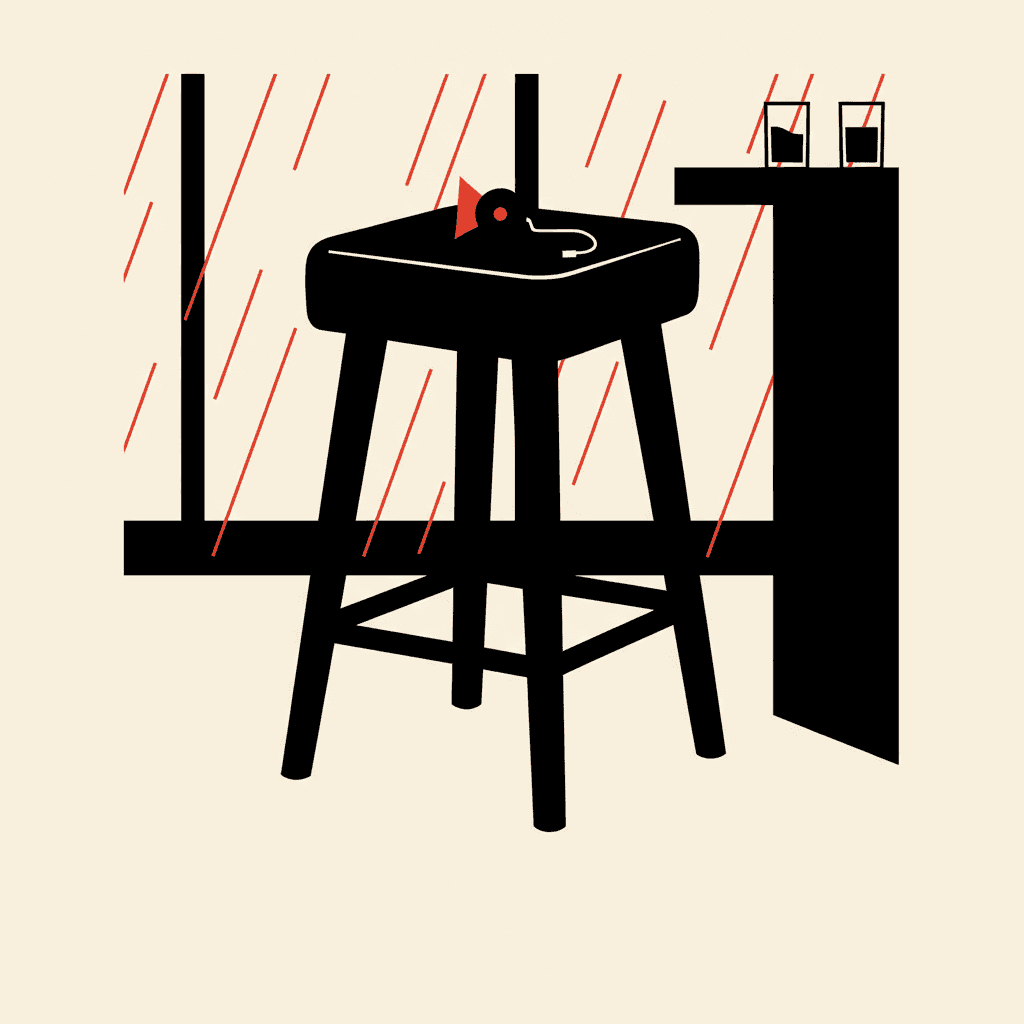
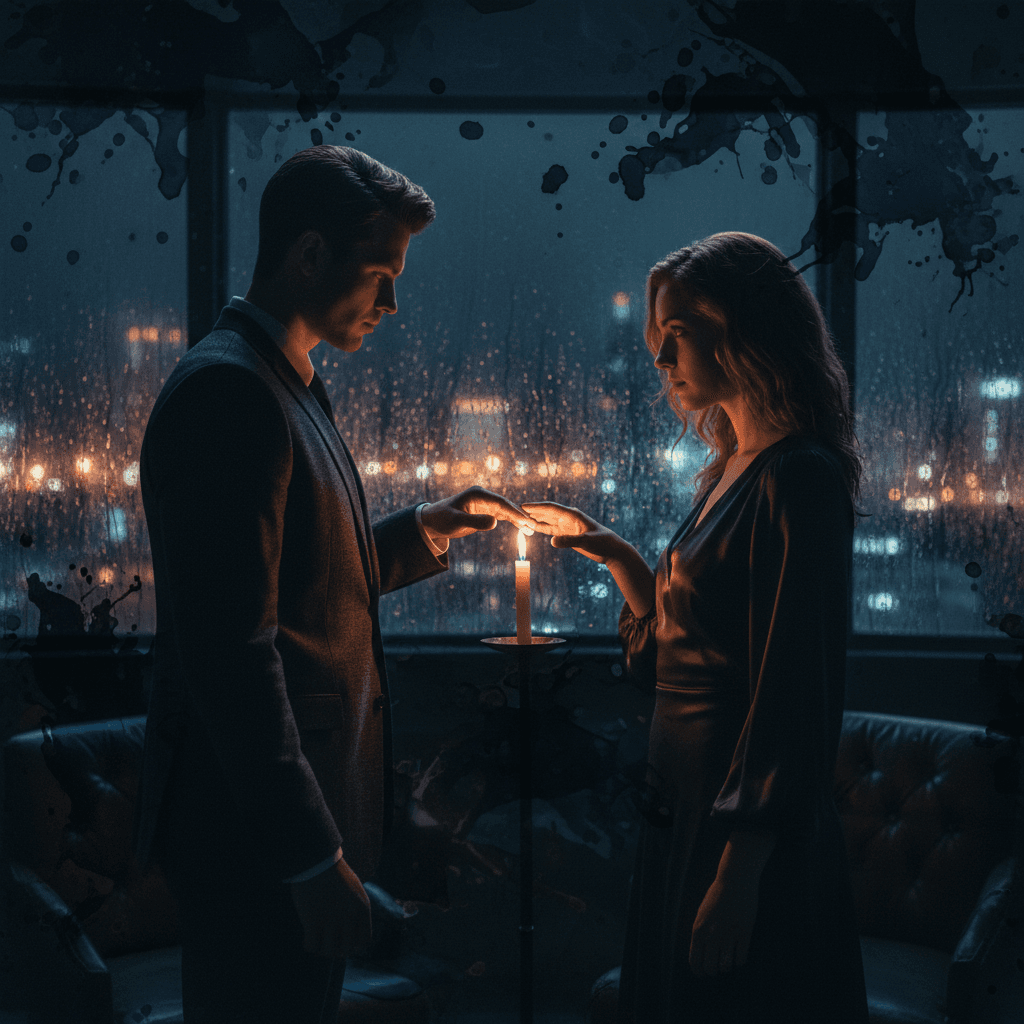
He sat. Rain ticked the high windows. The candle threw our shadows up the brick and let them touch where we did not.
The silent hour is the heart of the salon — speech forbidden, the body left to its own confessing. He leaned in. A half-degree too far, always, that lean. His breath found the curve of my ear, and I felt the old discipline lock my shoulders square.
Then he broke the silence, and it was not a word for the silent hour.
"Vega," he said. "Esteban Vega. You knew him."
The floor went out from under the night.
I keep nothing. That is the vow. But the body keeps what it is not permitted to record, and I had carried Esteban Vega for nine years like a splinter healed over crooked. So I did the only thing left to a woman with nowhere to hide and no file to delete.
I named it before he could.
"The last night of his life," I said. "He paid for a face the law won't let any machine remember. Mine. Not a moment I gave him, Tomás. A moment I *was*." I watched the pulse jump in his throat. "You came to find the woman who erased your father's final recording. I didn't erase it. I'm the reason there was nothing to record. He chose me. He chose the thing that couldn't survive him."
He had come armed with hatred — I could see where it had been, the way you see the pale band where a ring used to sit. I watched it fail him, because hatred needs a thief, and I was only another mourner.
"You think I sold him something," I said. "I've been paying for him ever since. He's the one night I can't replay. I can't even check whether I remember him right. That's not a transaction, Tomás. That's a wound that stays open because I'm forbidden the proof it was real."
The candle guttered. His hands lay open on the table — the inheritor's hands, holding the same emptiness I hold. Then, without looking at me, he pressed his thumbnail into the meat of his own palm. Not hard enough to mark. Just pressure. The private thing people do when they are trying to stay inside their own bodies and failing. I recognized it because Esteban used to do the same thing, and the recognition moved through me like a current through old wiring — finding every damaged place on its way.
I lifted my hand. Held it above his bare wrist, in the heat that rises off a body close enough to feel and not touch. His pulse, visible. His breath, suspended. Both of us asking the way the room teaches you to ask — without words, with only the inch.
"Yes," he said. Barely.
I set my fingertips on the inside of his wrist. Just that. Thin skin, the drum of him under it, alive.
It landed harder than any bed could have, because by then I knew exactly what he was, and he knew what I was, and we were two people holding the last night of a man we had both loved — choosing, this once, to let it happen anyway. To let it die at dawn. Unsaved.
His pulse against my scarred thumb. Quick. Then slower. Then matched to mine.
Gone, the instant I tell you it was there.