
You have watched him make coffee forty-one times, which you know because you counted, which you know because counting was the only way to make it feel like something other than what it is.
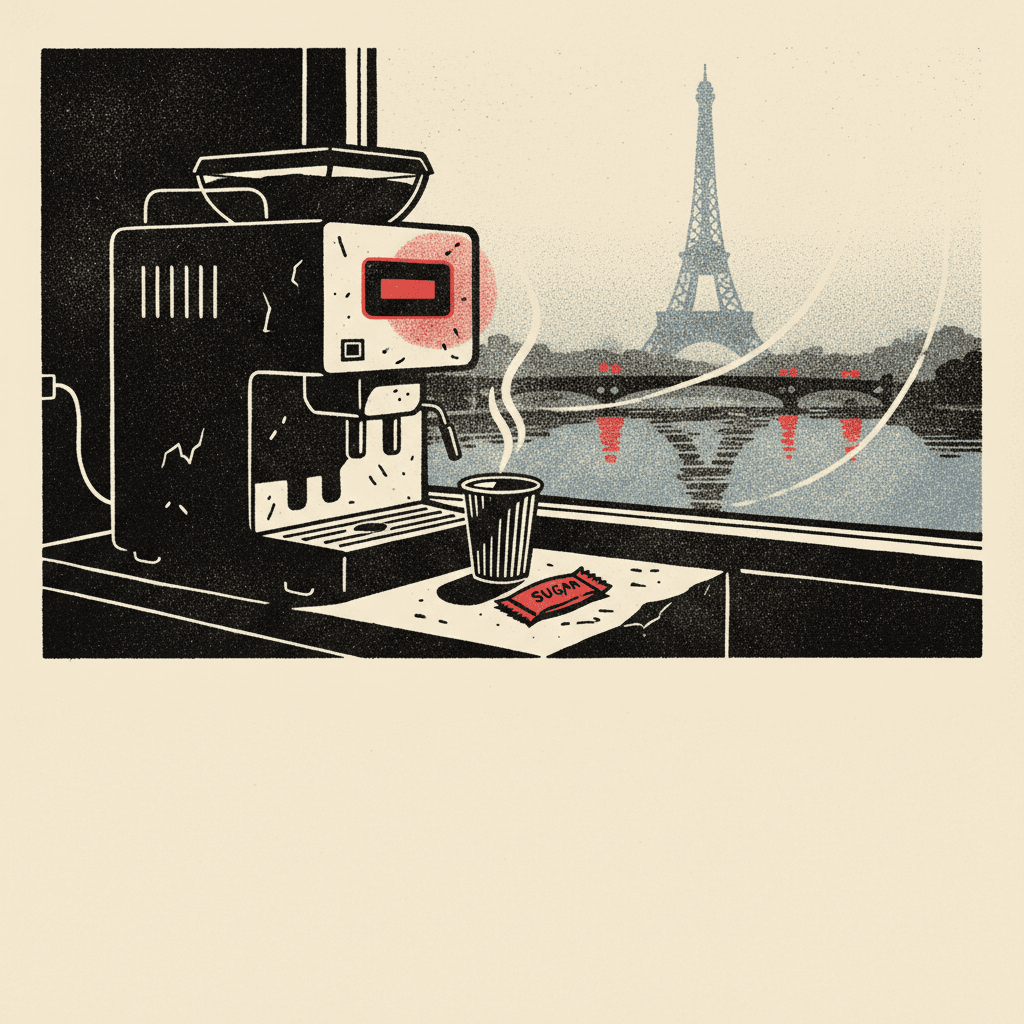
He does it the same way. The kettle first, before anything, before the membrane on the window has even started to sweat. He hates the smart-pour, has always hated it, fills the kettle by hand and stands there with his thick fingers around the handle as if it might run from him. The cardamom is already in the grout, the walls, the both of you. Neither of you has ever cleaned it. There is a version of love that lives in not cleaning a thing.
You stand one step closer than you need to. This is the only part that is yours. You could watch from the doorway. You choose the counter, the place where your shoulder is almost at his. He pours the water in a slow circle, the way someone taught him once, the way he no longer remembers learning. Steam climbs. The traffic below is moving and you cannot hear it, which is its own kind of intimacy, the held breath of a city pretending not to look.
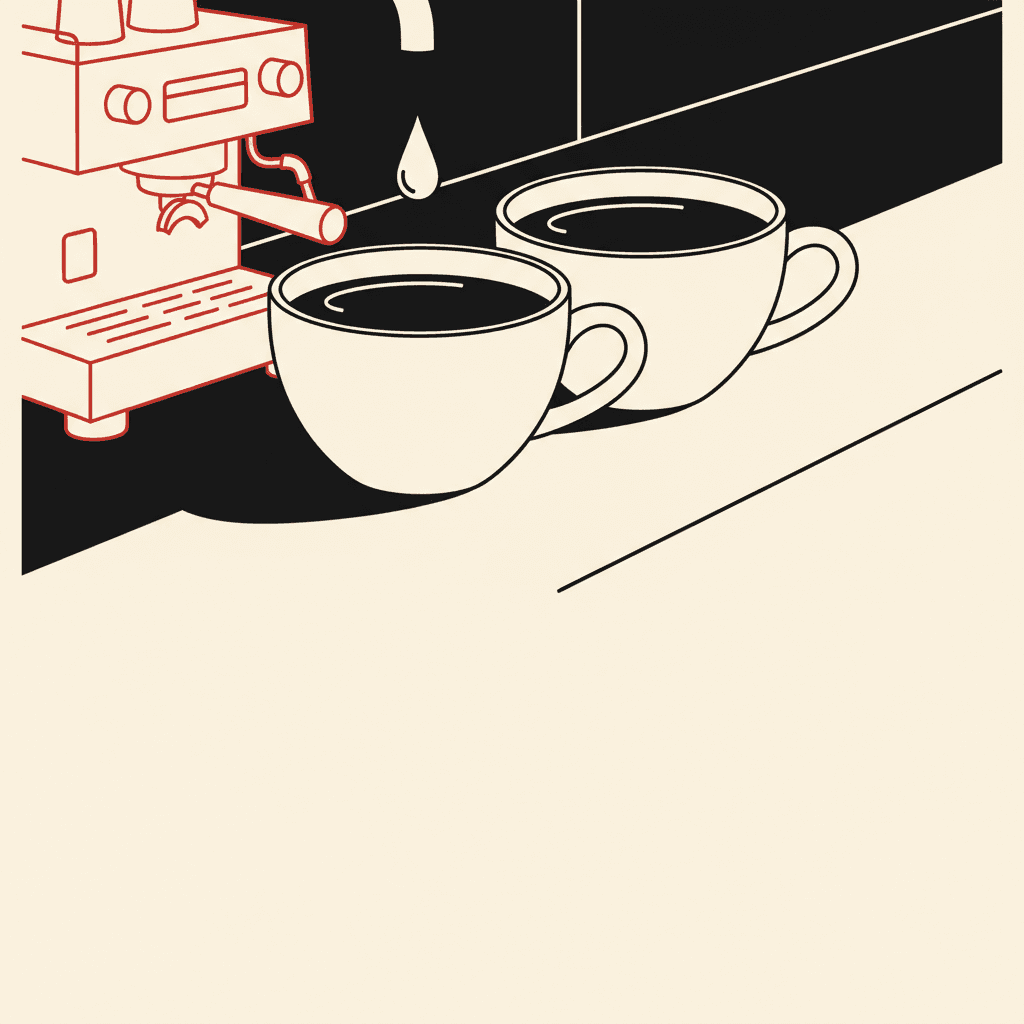
He sets the chipped mug down. His hand stays on the handle. You put yours near it. You do not touch. The not-touching is the whole morning, is the thing you came in here for, is forty-one mornings long.
He does it the same way.
The kettle first. The membrane on the window beading now, the blue hour going grey at its edges. He fills the kettle by hand and stands with his fingers around the handle. The cardamom in the grout. You stand one step closer than you need to, your shoulder almost at his, and he pours the water in a slow circle, and the steam climbs, and you watch the burn scar below his left ear move when he swallows. He never had it corrected. He said once that a body should be allowed to keep its accidents.
He sets the mug down. His hand stays.
He turns the handle toward you before he lifts his own. He has always turned it toward you. That is the small wrong thing, except it is not wrong, it is the most right thing he does, and you have stopped letting yourself notice it because noticing it would mean admitting it could stop. You put your hand near his. You do not touch. You think: I want to be chosen by the part of him that still has to decide. Not the part that has learned my mornings. The deciding part. The part that turns the handle.
You do not say this. The archive drive hums in the other room. You leave it running even on Sundays because the sound of it powering down is the sound of a thing ending, and you preserve other people's endings for a living, and you know exactly what they cost.
You make coffee the same way.
The kettle first. You fill it by hand, which is not how you used to do it, which is how he did it, which you have inherited the way you inherit the dead's small gestures at work, lifting them out of the logs and pressing them into something a family can hold. The membrane on the window beads. The cardamom is still in the grout. You have not cleaned it. You will not clean it.
You pour the water in a slow circle. You stand one step closer than you need to, to nothing, to the space where his shoulder was. You set the chipped mug down — his mug, the one he refused to recycle, the one he could not have taken because taking it would have meant it was a trip he wasn't coming back from, and so it stayed, and so he is somewhere over an ocean being a light-body in a boardroom, performing himself, optimized, witnessed, and the mug is here, and you are here turning its handle toward the empty air on the off-chance that the deciding part of him is doing the same.
You put your hand near where his would be.
You do not touch. There is nothing to not-touch. This is the difference, and it is the entire difference, and no one is here to name it.
The drive hums. The block's AI will wake in eleven minutes and tell you both good morning. You have counted. Counting is the only way to make it feel like something other than what it is.