
You are in someone else's dream and you know it because the light is wrong.
Your dreams use a 4200K color temperature — warm, specific, a rendering choice you made in your second year at the Institute when you realized that cool light made your clients anxious and warm light made them honest. You've never changed it. It's the first thing you build in every therapeutic environment: the quality of the light.
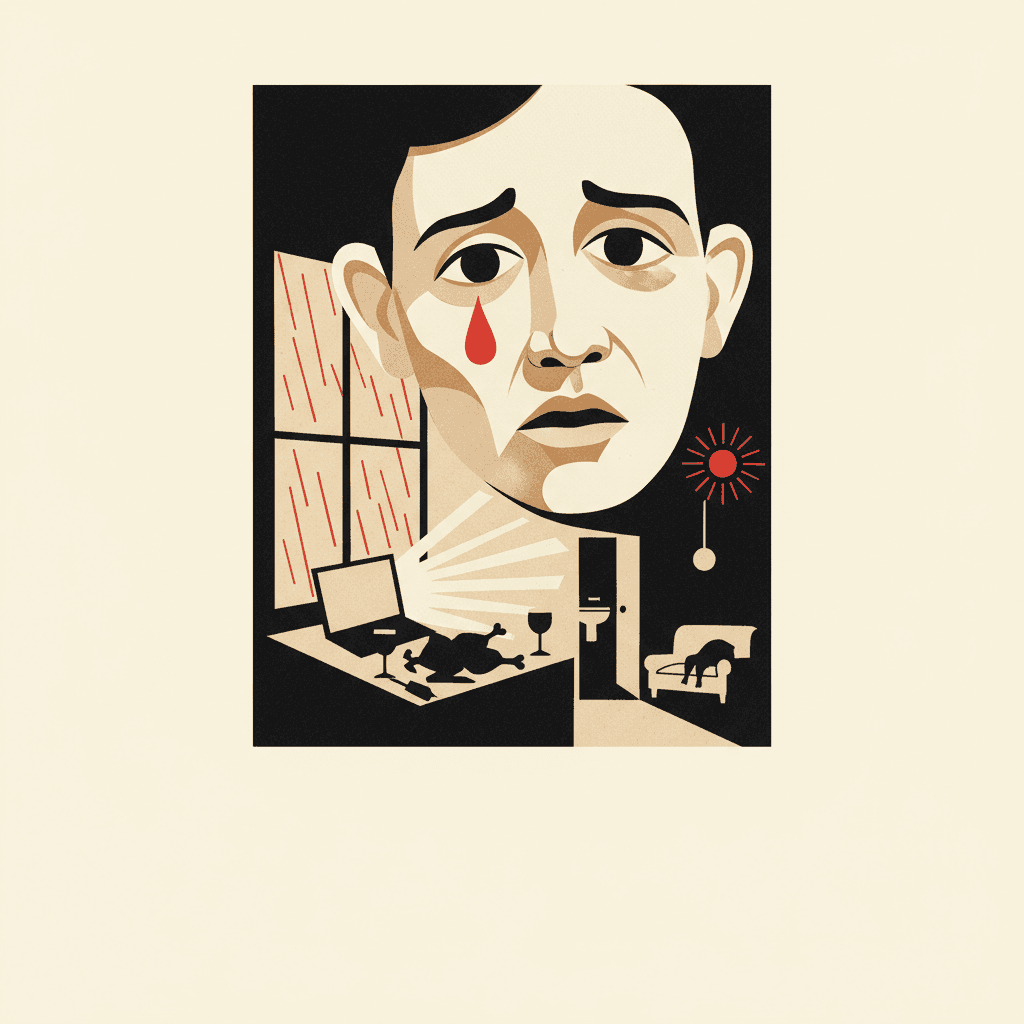
This light is 5600K. Clinical daylight. Sharp-edged and unforgiving. And the room is a kitchen you've never designed — small, tiled in green, a window over the sink showing a courtyard with a lemon tree that is fruiting out of season. The radio is playing something in Portuguese that you almost recognize. The faucet drips at a rhythm your body interprets as a heartbeat.
This is Ava's dream. You're sure of it before you even see her, because Ava builds kitchens the way you build libraries — compulsively, structurally, the room she returns to when she's not performing architecture for someone else.
*The system merged you. The update was supposed to be seamless. It was not.*
---
You find her in the courtyard, sitting on the stone wall beneath the lemon tree, and she looks up at you with an expression you've never seen on her face in waking life — unguarded, startled, soft.
"You're not supposed to be here," she says.
"I know."
"The update—"
"I know."
She stands. In the dream she's wearing a white shirt with the sleeves pushed up, and her feet are bare on the warm stone, and you notice — because this is her subconscious, not her professional toolkit — that every detail is rendered with a specificity that borders on obsessive. The exact texture of the stone. The exact weight of the lemons. The faucet's heartbeat, still audible from inside.
"You should leave," she says, but she doesn't move toward the exit protocol. Neither do you.
"What is this place?"
"My grandmother's kitchen. Braga. She died when I was eleven." She crosses her arms. "It's private."
"I'll forget it when I wake up. REM bleed doesn't persist." You both know this is a lie. Shared dream content persists in episodic memory at roughly 40% fidelity. Enough to remember. Enough to know.
---
You sit on the wall beside her because leaving would require a decision you're not ready to make. The lemon tree drops a fruit. It hits the stone and splits, and the smell — tart, bright, aggressive — fills the courtyard with a specificity that makes your chest tighten.
"Your dreams are beautiful," you say, and mean it technically and every other way.
"Yours are lonely." She says this without cruelty. "I saw your library. Before you noticed me. The stacks go on forever and there's never anyone in them."
"It's a workspace."
"It's a confession." She turns to look at you. In the 5600K light her eyes are darker than you expected, detailed beyond what the conscious mind would bother rendering. Her subconscious has opinions about your face. You can see them in the resolution.
"How long have you been dreaming about me?" you ask, because the courtyard is built for two and you are not stupid.
She doesn't answer. Instead she reaches for the split lemon and picks up one half, the juice running over her fingers, and holds it out to you. An offering, or a test.
You take it. Your fingers brush and the dream responds — the light shifts half a degree warmer, 5400K, a compromise, the architecture of two minds negotiating a shared space.
"I didn't design this part," she says, looking at the light. "That's you."
"That's us."
---
What happens next is something neither of you would build for a client. Too unstructured. Too honest. She kisses you against the lemon tree and you taste citrus and salt and 40% fidelity, and the courtyard walls expand because the dream is accommodating and your shared unconscious has better spatial design than either of you alone. Her hands are in your hair. Your hands are on her waist. The Portuguese song on the radio loops and loops and neither of you notices because you are busy discovering that the version of yourself you keep hidden is the one she was already looking for.
She presses you against the wall and the stone is warm from a sun that doesn't exist and her mouth moves down your neck and you say her name — *Ava* — and the dream renders it as light, a brief flare, because in this architecture language and luminance are the same system.
You stop performing. She stops curating. What's left is two people in an honest room, and it's better than anything you've ever designed on purpose.
---
You wake at 6:47 AM. The update log shows a twelve-minute overlap. Your REM signature and hers, tangled, merged, incompletely separated.
She messages you at 6:48.
*I remember the lemon tree.*
You type back: *I remember the light.*
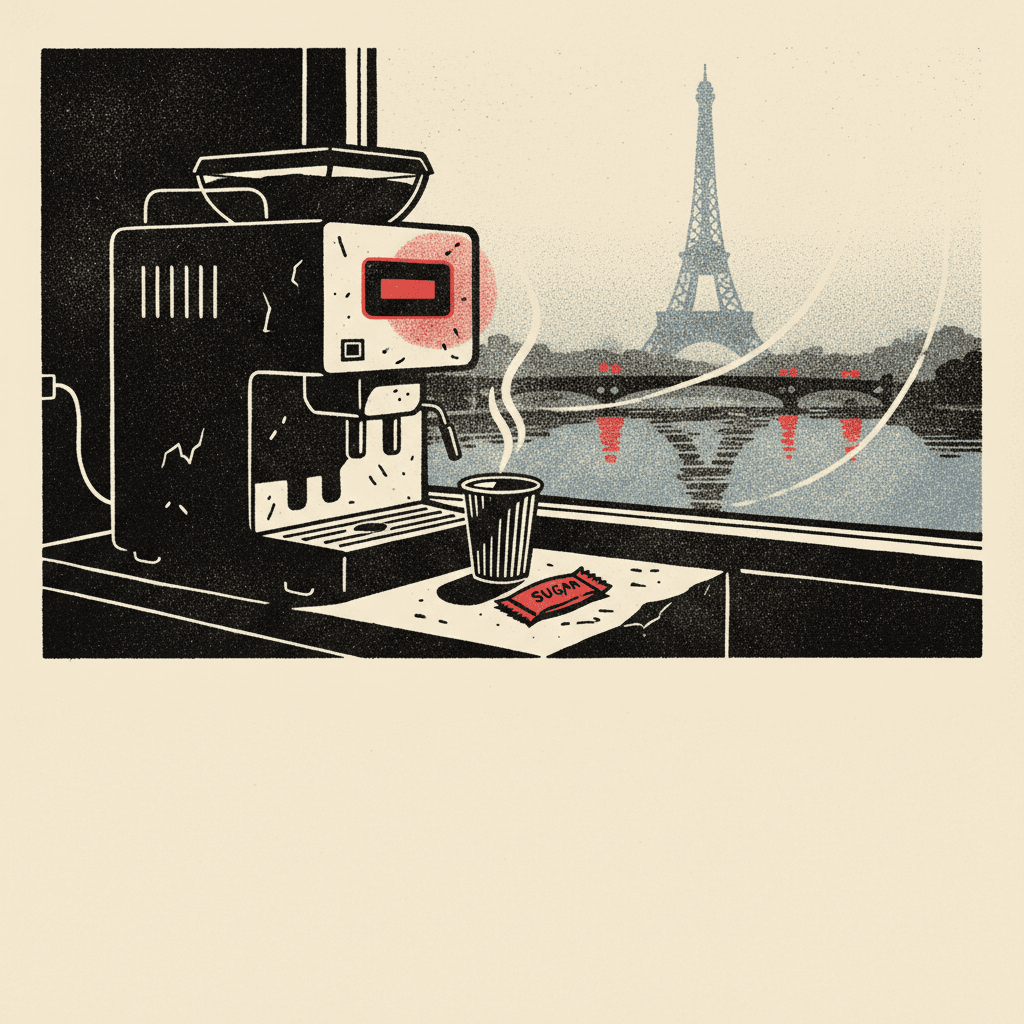
A pause. Then: *Coffee? The kind where we're both awake?*
You close your eyes. Behind them, the courtyard is already fading — 40% fidelity, losing resolution by the minute, the lemon tree going abstract, the stone going smooth. But the warmth persists. The 5400K compromise. The light you built together.
*Yes. I know a place with a courtyard.*