
I need to tell you what I did in the disabled bathroom of the downtown transit Starbucks, and I need you to understand it wasn't about him, except that it was entirely about him.
There is one working outlet in that place, behind the trash station, and on Monday it was raining and we both needed to charge. Nineteen years of data entry versus twenty of watching cameras, and the adaptability dashboard didn't care which. It scored us the same way it scored everyone in the transition classes, refreshing every ninety seconds with a little chime, and every ninety seconds Kevin flinched like a man who kept forgetting the pain was coming.
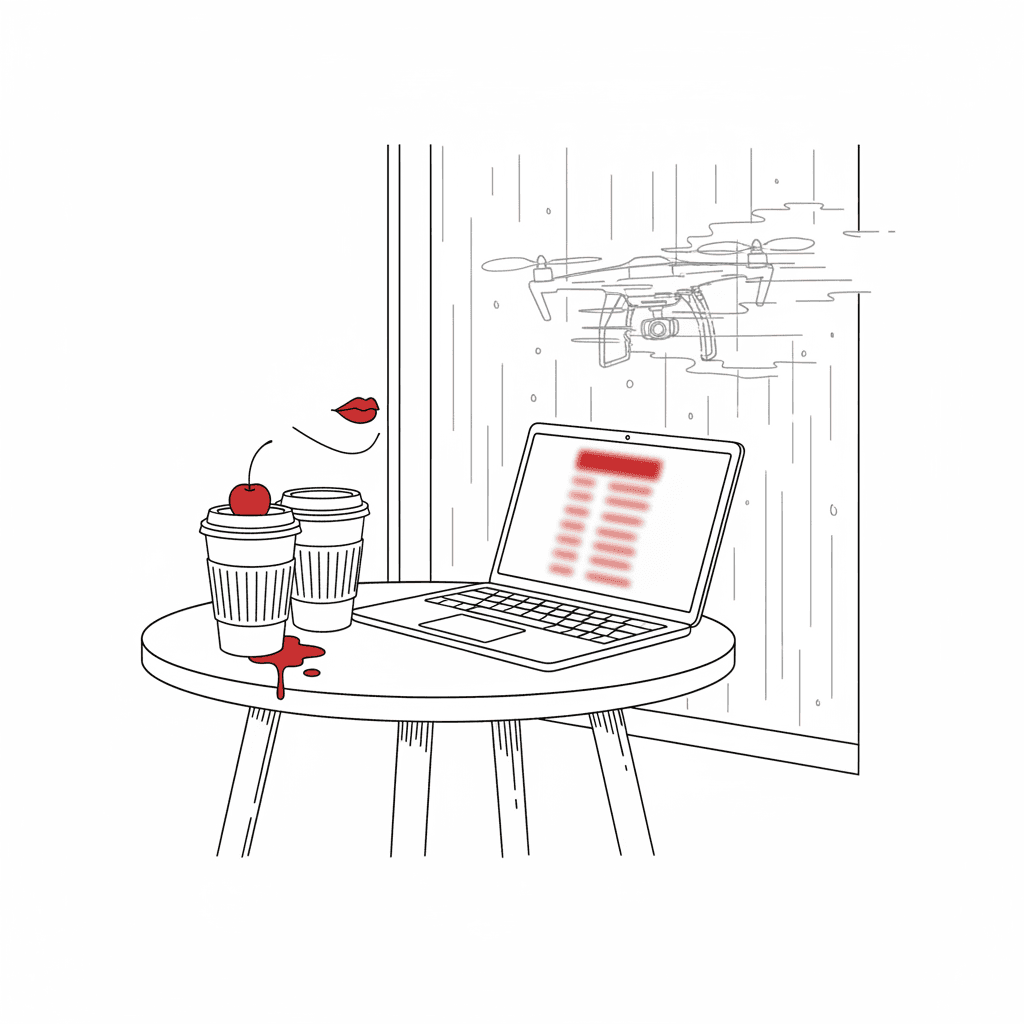
We shared the cord. That was the whole thing, at first. His laptop and mine at the wobbling corner table — the one that rocks if you lean on it — and the single cable snaking to the outlet like we'd agreed to be tied together. He kept fidgeting with his coffee sleeve. He has these hands: broad, gone a little soft, the kind that have held a flashlight and a clipboard and nothing that mattered for a long time. When the cord slipped he reached to fix it and his thumb landed on the inside of my wrist.
I didn't pull away. I want to be honest about the order of things. I didn't pull away, and then I noticed I hadn't, and then I decided not to.
He said my name like it was a word he'd been saving. Jennifer. Not Jen. The full thing, careful, the way you'd carry water in your hands. Twenty years of practicing an unreadable face and he couldn't do it with my name. That's what got me. Not the shoulders, not the gray at his temples. The way he said it like it still cost something to lose.
At 7:34 the dashboards chimed together and I looked at his screen. I wasn't supposed to. He was up at the counter and his laptop was open and I looked, the way you look at a stranger's phone, and I saw both numbers because he'd left the comparison view up like a bruise he kept pressing. Seven points. I was seven points higher. I knew, sitting at that wobbling table with the rain turning the drones outside into gray smears on the glass, that I was going to win and he was going to be replaced and I was not.
I looked away before he came back. That was the decision. Not the bathroom — the looking away. I chose not to let him see that I knew.
And then when he sat down and his thumb found my wrist again I let him believe it was even. I let him believe we were two drowning people who might reach each other. I let him say my name like a chance.
We went to the accessible bathroom off the concourse because it locks and it's the only door in that building a camera doesn't own, and he knew that, of course he knew that, twenty years of knowing where the cameras aren't. He put his mouth to my jaw, just below the ear, and said something I won't repeat because it was mine, and I said yes — out loud, because I wanted there to be no confusion later, not for him, for me. His hand under the blazer I bought to be someone I'm not anymore. The fluorescent hum through the wall. The smell of him: wet wool and burnt milk. I put my hand in his hair and it was going gray and soft too and I thought: I am seven points of this man's life and he doesn't know. I almost laughed. That's the part I haven't told anyone. I almost laughed, and I turned it into something else, and he didn't notice, and that's worse than all of it.
He knelt on that dirty tile and I let him, and it was the first time in a year my body forgot it was being scored.
That's the confession, except it isn't. The confession is that I already knew I'd win. So I didn't do it because I wanted him, though I did. I did it because tomorrow he loses everything and I keep my desk, and I wanted — just once, before the number did what the number does — to have someone's grief in my hands that wasn't only mine. I wanted to borrow his not-knowing. I wanted to be inside it, literally, and I was, and it worked, and that's who I am now.
I let him hope. That's the thing I did.
He still leaves voicemails. Says my name like it's a door he thinks is just stuck.