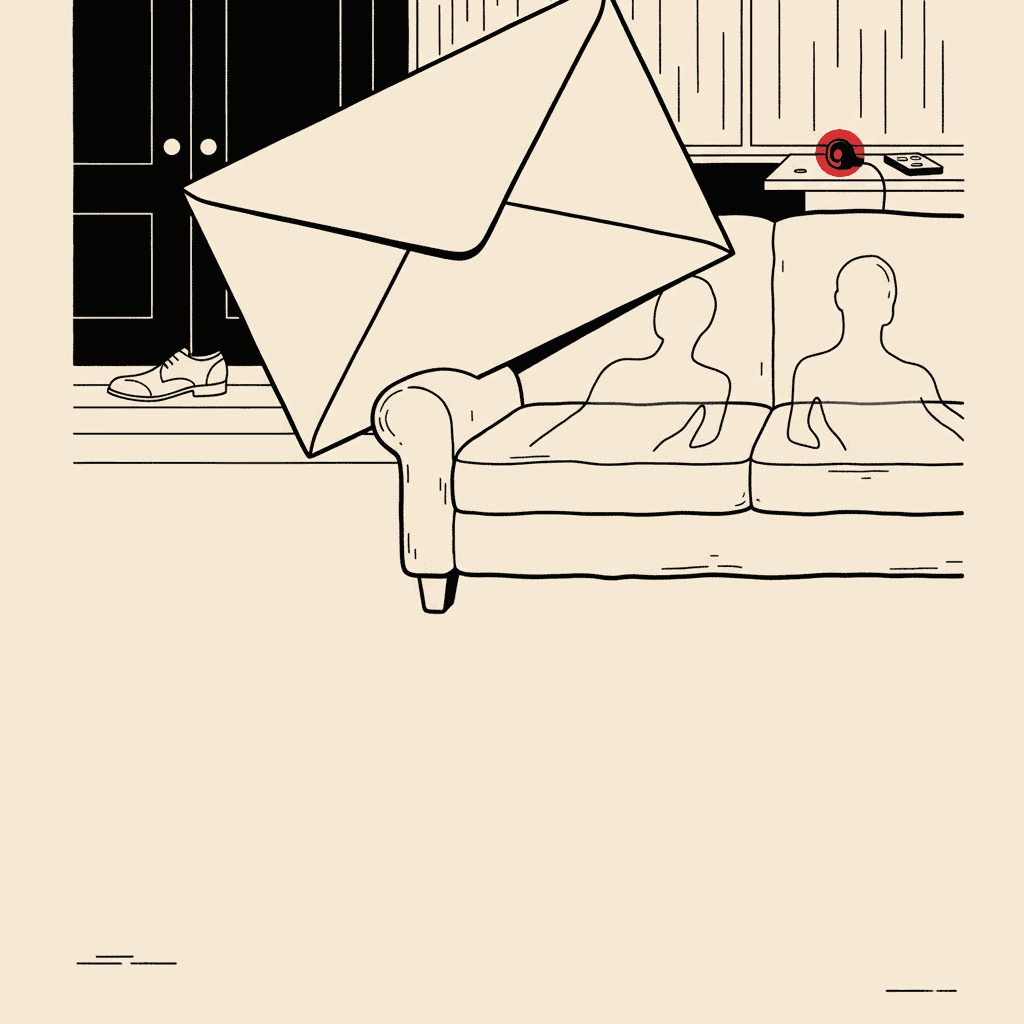

She talked to Marcos before the coffee finished, same as always, same low voice she used for confessions and weather.
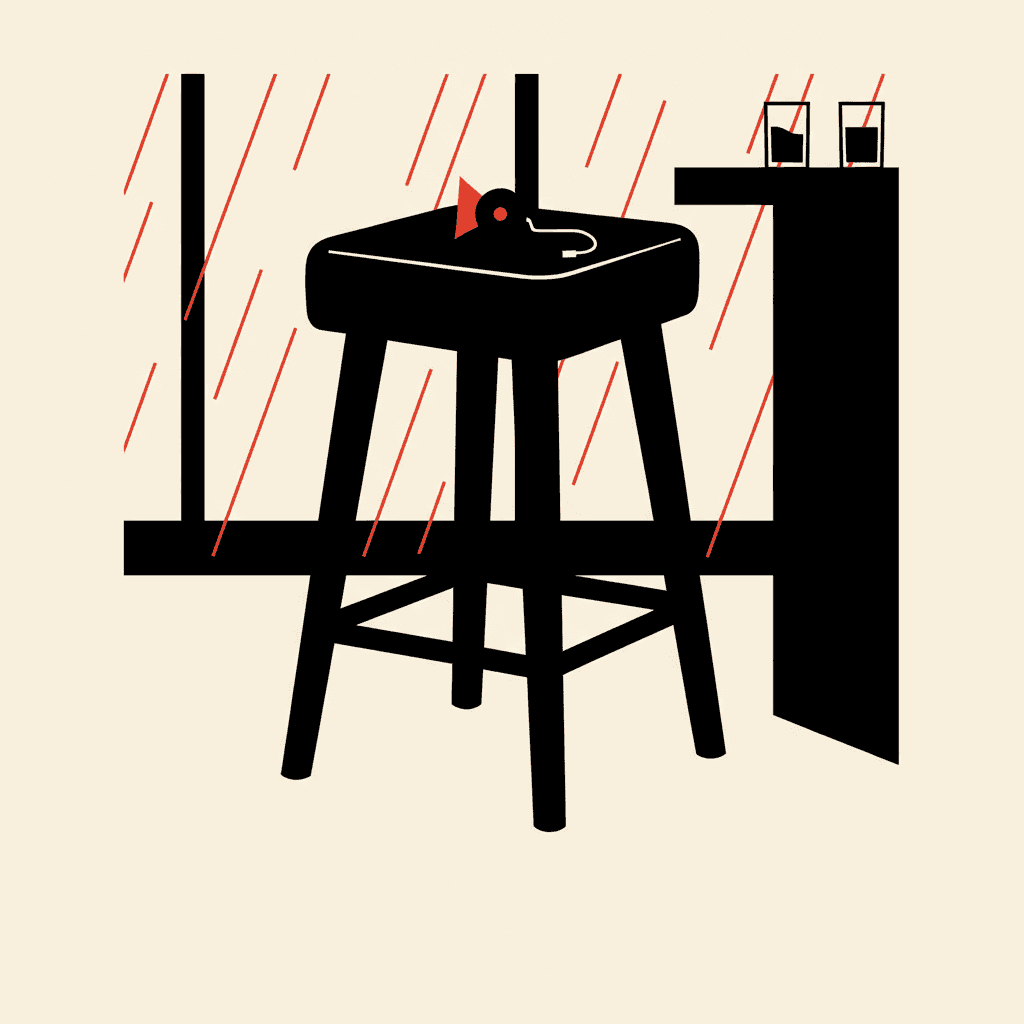
Soledad ground the beans by hand because the auto-mill flattened them, killed whatever made the smell worth waking for. The crank turned under her palm. The kitchen filled with that dark green bitterness, and under it the carrier-hum of the interface charging on the tile, a sound like a refrigerator deciding whether to speak.
"The Santa Anas came back," she said to the room. "You'd have hated it. You always said heat from the east was lying about something."
The room did not answer in any way the room could be said to answer. But the interface listened, and somewhere inside it the shape of Marcos arranged its borrowed syntax, and a voice that was almost his said, *Everything from the east is lying. That's why the sun has to start over every morning.*
It was the kind of thing he'd have said. That was the cruelty of it. They built it well.
She'd built it well. That was worse.
Tomás came at six-fifteen on Sundays. Long enough that she could be done. He knew the timing the way a man knows a tide table for a coast he has decided to live on. He arrived smelling of outside, of the dry wind, jacket holding the night's cold in its seams, and she handed him a cup before he asked, and they stood at the counter where two people could stand if neither of them moved much, and they did not talk about it.
This morning he came at six-eight.
She heard the key, the door, the particular weight of him in the hall — and her own voice still going, soft, mid-sentence, telling the dead man about the wind. She stopped. The interface waited. Tomás stood in the doorway with the cold still on him and did not pretend he hadn't heard.
She turned off the device. The hum cut out, and the kitchen got that much smaller.
"You're early," she said.
"By seven minutes." He set his keys down like they were fragile. "I've been early for a while, Soledad. A few minutes more each time." He stopped, chose the smaller word. "I've been listening from the hall."
She poured his coffee because her hands needed something to translate. "How long."
"Months."
She nodded slowly, as if he'd confirmed a thing about the weather. "And you came anyway."
"I came *because*." He said it and then looked like he wished he hadn't. He looked at her the way a man looks at a door he isn't sure is locked, not sure which answer he's hoping for. "I wanted to be in the room while you did it. I told myself that was love. Standing where he can't."
The reach happened by accident. She slid the spoon across the counter and his fingers came for the same spoon and they stopped, both of them, an inch of cool air between knuckle and knuckle, and neither closed it. The scar along her jaw — the comma, she called it, the place a sentence had paused and gone on — caught the amber coming off the window.
The window faced a wall. The wall was turning gold.
"He's not jealous," she said. "I made him generous. It seemed like a kindness at the time. To myself." She drew the spoon back. "You're competing with something I designed to never compete."
"I'm not competing." His voice was low, careful as the cities he listened to. "I want to know what it would be to be the ritual. Not the witness. To be the thing you do at six a.m. because the day doesn't start until you've done it."
She could have turned to him then. The whole hinge of the morning sat in whether she turned to him then.
She turned to the window instead. To the wall going gold, to the city before its traffic woke, to the hour that belonged to no one and so could be given to anyone.
"Drink your coffee," she said. "It's getting cold."
He drank. She drank. The interface sat dark between them like a stone they had agreed, for now, to leave unturned. Outside, the wind kept lying about where it came from, and inside the narrow kitchen two living people stood close enough to touch and did not, holding the silence the way you hold a question you are not ready to hear answered.